
Changing engine oil at home can be one of the most practical ways to understand your vehicle, save on routine service costs, and keep maintenance on schedule. But even a simple DIY oil change can become messy without the right drain pan. A good pan helps collect used oil safely, reduces spills, and makes disposal easier. It is also one of those basic garage maintenance tools that can improve the entire workflow, whether you work on a compact car, SUV, truck, motorcycle, or lawn equipment. When choosing oil change equipment, the goal is not just to buy the biggest container available. You need the right size, design, material, and handling features for your space, vehicle type, and maintenance habits.
Why the Right Drain Pan Matters for Vehicle Maintenance
An oil drain pan may seem like a simple container, but it plays a major role in keeping vehicle maintenance clean, safe, and efficient. Used motor oil can stain floors, create slip hazards, and harm the environment if it is not handled properly. A poorly designed pan may overflow, splash, leak during transport, or make it difficult to pour oil into a recycling container.
For anyone building a practical set of automotive repair tools, the drain pan deserves careful attention. It supports routine maintenance, helps protect your workspace, and makes the job easier for both beginners and experienced DIY mechanics.
A quality pan can help you:
-
Catch used oil without splashing
-
Reduce cleanup time after service
-
Move waste oil more safely
-
Pour oil into a storage container with less mess
-
Keep your garage floor cleaner
-
Support regular maintenance habits
If you perform more than one DIY oil change per year, choosing the right pan is a small decision that can make a noticeable difference.
Match the Pan Capacity to Your Vehicle
Capacity is one of the first features to consider. The drain pan must hold more oil than your engine contains. Most passenger vehicles use several quarts of oil, while trucks, diesel engines, and commercial vehicles may require much more. Choosing a pan that is too small increases the chance of overflow, especially if you misjudge the oil volume or if the oil drains quickly.
For small cars and motorcycles, a compact pan may be enough. For SUVs, pickup trucks, or multiple vehicles, a larger-capacity pan is often more practical. If you maintain several vehicles at home, a bigger pan can save time because you may not need to empty it after every single service.
As a general guideline:
-
Small pans are useful for motorcycles, lawn equipment, and compact cars.
-
Medium pans work well for most home garages and standard vehicles.
-
Large rolling pans are better for trucks, SUVs, and repeated maintenance jobs.
The best option is one that gives you extra room beyond the expected oil volume. Extra capacity helps prevent spills and makes the process more forgiving.
Choose a Design That Fits Your Workspace
Not all garages are the same. Some people work in a full-size workshop with plenty of clearance, while others service vehicles in a driveway or small home garage. The right design depends on your available space and the height of your vehicle.
Low-Profile Drain Pans
Low-profile pans are ideal for cars with limited ground clearance. They slide more easily under the vehicle without needing excessive lifting. This can be especially helpful if you use ramps or jack stands and want to position the pan accurately under the drain plug.
Rolling Drain Pans
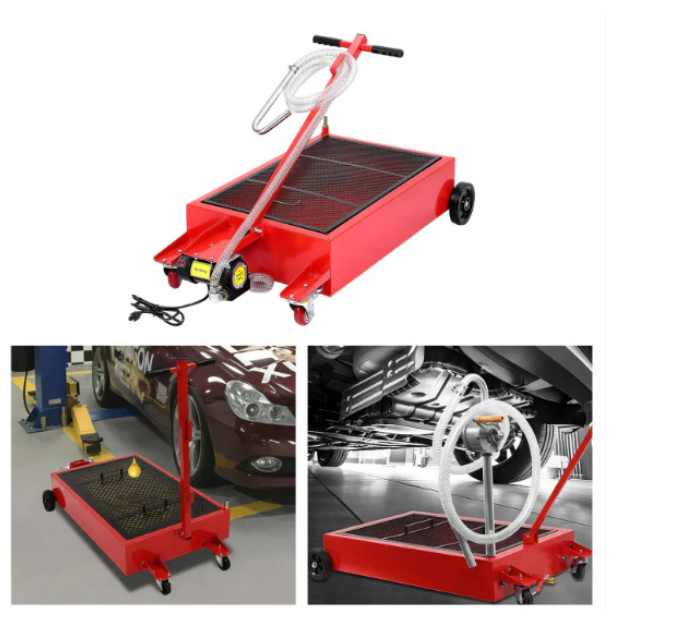
Rolling pans are useful for heavier maintenance work. They often come with wheels, handles, and larger tanks, making them easier to move when full. Used oil becomes heavy quickly, so mobility matters if you need to transport the pan across the garage.
Funnel-Top Designs
Some pans include a wide funnel-shaped top that helps guide oil into the container. This design reduces splashing and is helpful when oil drains at an angle or when the drain plug is positioned awkwardly.
Closed-Container Pans
Closed-container designs are practical when you need to store used oil temporarily before recycling it. These pans usually include caps or sealed openings to reduce leaks and odors.
When comparing options, think about how you actually work. The best pan is not always the largest or most expensive one. It is the one that fits your vehicle, garage layout, and maintenance routine.
Material Quality: Plastic vs. Metal
Oil drain pans are commonly made from plastic or metal. Both can work well, but each has strengths and limitations.
Plastic pans are lightweight, affordable, and resistant to rust. They are easy to carry and suitable for most home users. High-quality plastic models can last a long time when used properly. However, cheaper plastic may crack over time, especially if exposed to extreme temperatures or rough handling.
Metal pans are often more durable and heat-resistant. They may be preferred in professional settings or heavy-duty environments. The downside is that metal can be heavier, may dent, and can rust if not properly maintained.
For most home garages, a sturdy plastic model is usually enough. For frequent use, larger vehicles, or workshop-style maintenance, a heavy-duty design may be worth considering.
Important Features to Look For in Oil Change Equipment
The right oil change equipment should make the task cleaner, safer, and easier from start to finish. When shopping for a drain pan, look beyond capacity and consider the details that affect daily use.
Built-In Pour Spout
A pour spout helps transfer used oil into a recycling container without spilling. This is one of the most useful features for home maintenance because disposal is often where messes happen.
Secure Caps or Plugs
If the pan doubles as a temporary storage container, secure caps are important. They help prevent leaks while moving or storing used oil before disposal.
Splash Guard
A splash guard or wide collection area can help prevent oil from bouncing out of the pan. This is especially useful when oil drains quickly or when the pan is not perfectly centered.
Strong Handles
Handles make it easier to carry the pan after it is filled. Since used oil is heavy, weak or awkward handles can make the job frustrating.
Wheels or Casters
For larger pans, wheels are almost essential. They reduce lifting and make it easier to move the pan safely.
Pump System
Some larger units include a hand pump or electric pump for transferring used oil. This feature is more useful for people who maintain multiple vehicles or work in a garage setting where lifting a full container is inconvenient.
For anyone upgrading their garage maintenance tools, these features can improve both convenience and safety.
How to Choose the Right Size for a DIY Oil Change
For a basic DIY oil change, size should be based on your vehicle’s oil capacity and the amount of working space under the vehicle. A small car may not need a large rolling tank, but a shallow pan with enough width can still be helpful. A truck may need a larger container with wheels because of higher oil volume and greater clearance.
Before buying, check your owner’s manual or service guide to confirm how much oil your engine holds. Then choose a pan with extra capacity. For example, if your engine holds six quarts, do not choose a pan that holds exactly six quarts. Extra room helps prevent overflow and allows for splashing or angled drainage.
Also consider whether you will use the pan for other fluids. Some people use separate containers for engine oil, transmission fluid, coolant, or gear oil to avoid contamination. If you handle different fluids, labeling each pan can help keep your workspace organized.
Safety and Cleanliness Tips
A clean oil change depends on preparation. Even the best drain pan will not prevent every problem if the setup is rushed. Before removing the drain plug, make sure the pan is centered and stable. Oil may come out with force at first, then slow down as the engine empties.
Keep these tips in mind:
-
Wear gloves to avoid direct contact with used oil.
-
Place cardboard or an absorbent mat under the work area.
-
Let the engine cool slightly before draining oil.
-
Do not overfill the pan.
-
Wipe the drain plug area before reinstalling the plug.
-
Transfer used oil into a sealed container for recycling.
-
Clean the pan after use to prevent residue buildup.
Used motor oil should never be poured into the ground, drains, or regular trash. Most communities have recycling centers, auto parts stores, or service stations that accept used oil.
Storage and Garage Organization
A drain pan should be easy to store when not in use. If your garage is small, choose a design that fits on a shelf, under a workbench, or against a wall. Pans with sealed lids are especially useful because they reduce odor and prevent accidental spills.
Good organization also makes maintenance more efficient. Keep your drain pan near related items such as gloves, funnels, oil filter wrenches, shop towels, and containers for waste oil. Grouping automotive repair tools by task saves time and reduces the chance of forgetting an important step.
If you maintain multiple vehicles, consider creating a small oil change station in your garage. It does not need to be complicated. A shelf with filters, oil, funnels, drain plug washers, and a dedicated drain pan can make routine service much easier.
When a Larger Drain Pan Makes Sense
A compact pan is fine for occasional use, but a larger unit may be better if you work on trucks, commercial vehicles, or several family cars. Larger pans are also useful if you prefer to collect oil from multiple services before taking it to a recycling location.
A larger pan may be the right choice if:
-
You service more than one vehicle regularly.
-
Your vehicle has a high oil capacity.
-
You want wheels for easier movement.
-
You need temporary storage before recycling.
-
You want a pump system for cleaner transfer.
For example, a rolling oil drain pan can be practical for users who need more capacity, easier mobility, and better control during fluid transfer.
The key is to avoid buying more than you need. A large pan can be helpful, but it also requires more storage space. Choose based on your actual maintenance routine, not just the biggest specification.
Common Mistakes to Avoid
Many buyers choose a drain pan too quickly and later realize it does not fit their needs. Avoiding common mistakes can save money and frustration.
One mistake is choosing a pan with too little capacity. Even if the oil volume seems manageable, fast drainage can cause splashing or overflow. Another mistake is ignoring vehicle clearance. A tall pan may not fit under a low car, even if it has the right capacity.
Some users also forget about disposal. Catching the oil is only half the job. You still need to pour it into a recycling container safely. A pan without a spout, cap, or easy handling design can make this step messy.
Finally, do not overlook durability. Cheap pans may work for one or two services, but a cracked or leaking container can create bigger problems. Reliable garage maintenance tools should be durable enough for repeated use.
Building a Better Home Maintenance Setup
An oil drain pan works best as part of a complete maintenance setup. Along with the pan, a basic home garage should include a filter wrench, socket set, funnel, gloves, jack stands or ramps, wheel chocks, shop towels, and a torque wrench. These items support safer and cleaner maintenance.
When building your collection of automotive repair tools, focus on quality and usefulness rather than buying everything at once. Start with the essentials and upgrade as your skills grow. A well-chosen drain pan is one of the first items worth buying because it is used repeatedly and directly affects cleanup.
Good tools also encourage consistency. When maintenance is easy to perform, you are more likely to stay on schedule. Regular oil changes help protect engine components, support fuel efficiency, and extend the working life of the vehicle.
FAQ
1. What size oil drain pan do I need for a regular car?
For most regular cars, a medium-capacity pan is usually enough. However, it is best to check your engine’s oil capacity first and choose a pan with extra room. This helps prevent overflow during a DIY oil change.
2. Can I reuse the same drain pan for different vehicle fluids?
You can, but it is better to use separate containers when possible. Mixing engine oil, coolant, transmission fluid, and other fluids can make recycling more difficult. Labeling your oil change equipment helps prevent confusion.
3. Are plastic oil drain pans durable enough?
High-quality plastic pans are durable enough for most home garages. They are lightweight, rust-resistant, and easy to handle. For heavy-duty or professional use, a larger reinforced model may be better.
4. How should I dispose of used motor oil?
Pour used oil into a sealed container and take it to an approved recycling location, auto parts store, or service center that accepts used oil. Never pour it into drains, soil, or household trash.
5. What features are most useful in a drain pan?
The most useful features include enough capacity, a wide collection area, a pour spout, secure caps, strong handles, and wheels for larger models. These details make the job cleaner and safer.
Conclusion
Choosing the right oil drain pan is a simple but important step toward cleaner and easier vehicle maintenance. The best pan should match your vehicle’s oil capacity, garage space, and maintenance frequency. For a basic DIY oil change, a low-profile pan with enough capacity and a good pour spout may be ideal. For larger vehicles or repeated service, a rolling unit with a pump or sealed storage design may be more practical. As part of your essential garage maintenance tools, the right drain pan helps reduce spills, improve safety, and make used oil disposal easier. When paired with dependable oil change equipment and quality automotive repair tools, it supports a more organized, confident, and efficient maintenance routine.
