
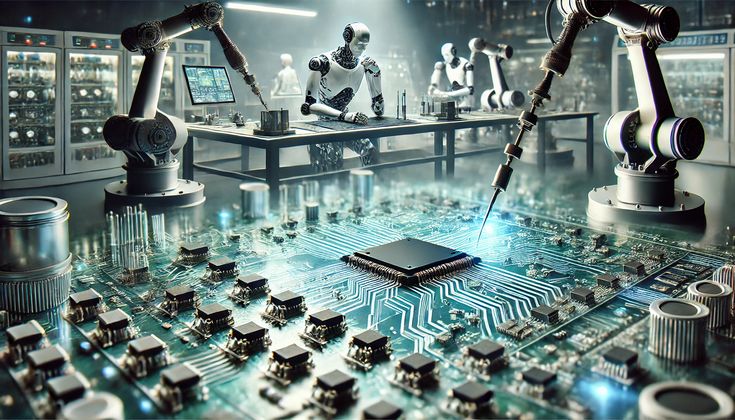
The industrial PCB manufacturing process is the backbone of modern electronics production. From smartphones and computers to automotive systems and medical devices, almost every electronic product depends on printed circuit boards (PCBs). Understanding the PCB manufacturing process helps engineers, designers, and businesses ensure better quality, reliability, and performance in their electronic products.
In this article, we will explore the full PCB board manufacturing process step by step, including design, fabrication, assembly, and testing in a clear and practical way.
What is PCB Manufacturing?
PCB manufacturing is the process of converting a circuit design into a physical printed circuit board that can electrically connect and support electronic components. A PCB provides mechanical support and electrical pathways for components like resistors, capacitors, microchips, and connectors.
The industrial PCB manufacturing process involves multiple stages that require precision, advanced machinery, and strict quality control.
Step 1: PCB Design and Layout
The first stage in the PCB manufacturing process is design. Engineers create a schematic diagram that represents the electrical connections of the circuit. After that, they convert the schematic into a PCB layout using specialized software.
During this stage, designers consider factors such as signal integrity, component placement, power distribution, and heat management. A well-designed layout reduces errors during manufacturing and improves overall performance.
Step 2: Printing the PCB Design
Once the design is finalized, it is printed onto a transparent film. This film is used to create a photographic mask that guides the next stages of production.
The PCB board manufacturing process relies heavily on accuracy at this stage because even small errors in the design transfer can affect the final product quality.
Step 3: Substrate Preparation
The base material of a PCB is usually made of fiberglass (FR4), which provides strength and insulation. In this step, the substrate is cleaned and prepared for layering.
A thin layer of copper is then applied to both sides of the board. This copper layer will later form the conductive pathways.
Step 4: Photoresist Application
A light-sensitive material called photoresist is applied to the copper surface. This layer helps transfer the circuit pattern onto the board.
When exposed to UV light through the design mask, the photoresist hardens in specific areas, creating a pattern that matches the circuit design.
Step 5: Etching Process
Etching is a critical step in the industrial PCB manufacturing process. The board is treated with a chemical solution that removes unwanted copper, leaving only the designed circuit pathways.
This process ensures that electrical connections remain only where they are needed, forming the functional circuit layout.
Step 6: Layer Alignment (Multi-Layer PCBs)
For complex electronic devices, multi-layer PCBs are used. These boards contain multiple layers of circuits stacked together.
Each layer must be precisely aligned and bonded using heat and pressure. This ensures proper electrical connectivity between layers through vias (small holes filled with conductive material).
Step 7: Drilling
After layering, holes are drilled into the PCB using high-speed precision machines. These holes allow components to be mounted and also enable electrical connections between layers.
The drilling process must be extremely accurate to avoid damaging the board structure.
Step 8: Copper Plating
After drilling, the holes are coated with copper to create electrical connections between different layers of the PCB.
This step is essential for ensuring that signals can pass through vias and reach all necessary parts of the circuit.
Step 9: Solder Mask Application
A solder mask is applied to protect the copper traces from oxidation and prevent short circuits. This layer also gives the PCB its characteristic green color, although other colors are also used.
The solder mask only leaves exposed areas where components will be soldered.
Step 10: Silkscreen Printing
In this step, labels, symbols, and component identifiers are printed onto the PCB surface. This helps technicians during assembly and troubleshooting.
The silkscreen layer improves readability and reduces assembly errors.
Step 11: Surface Finish
A surface finish is applied to protect exposed copper areas and improve solderability. Common finishes include HASL (Hot Air Solder Leveling), ENIG (Electroless Nickel Immersion Gold), and OSP (Organic Solderability Preservative).
Each finish type has its own advantages depending on the application and cost requirements.
Step 12: PCB Assembly
Once the bare board is ready, electronic components are assembled onto it. This step includes Surface Mount Technology (SMT) and Through-Hole Technology (THT).
In SMT, components are placed directly onto the surface of the board. In THT, components are inserted into drilled holes and soldered.
Step 13: Soldering Process
Soldering is used to permanently attach components to the PCB. Reflow soldering is commonly used for SMT components, while wave soldering is used for through-hole parts.
This ensures strong electrical and mechanical connections.
Step 14: Testing and Quality Control
Testing is a critical part of the PCB manufacturing process. Boards undergo various inspections such as:
- Visual inspection
- Automated Optical Inspection (AOI)
- Electrical testing
- Functional testing
These tests ensure that the PCB works correctly and meets all design specifications.
Importance of the Industrial PCB Manufacturing Process
The industrial PCB manufacturing process ensures that electronic devices are reliable, durable, and efficient. High-quality PCB production reduces failure rates and improves product lifespan.
Industries such as automotive, aerospace, medical, and consumer electronics depend heavily on precise PCB manufacturing to ensure safety and performance.
Conclusion
The PCB board manufacturing process is a highly detailed and technical procedure that requires precision at every stage. From design to testing, each step plays a crucial role in creating a functional and reliable circuit board.
Understanding the PCB manufacturing process helps businesses and engineers improve product quality, reduce errors, and optimize production efficiency. As technology continues to advance, PCB manufacturing will remain a critical foundation of the global electronics industry.
