
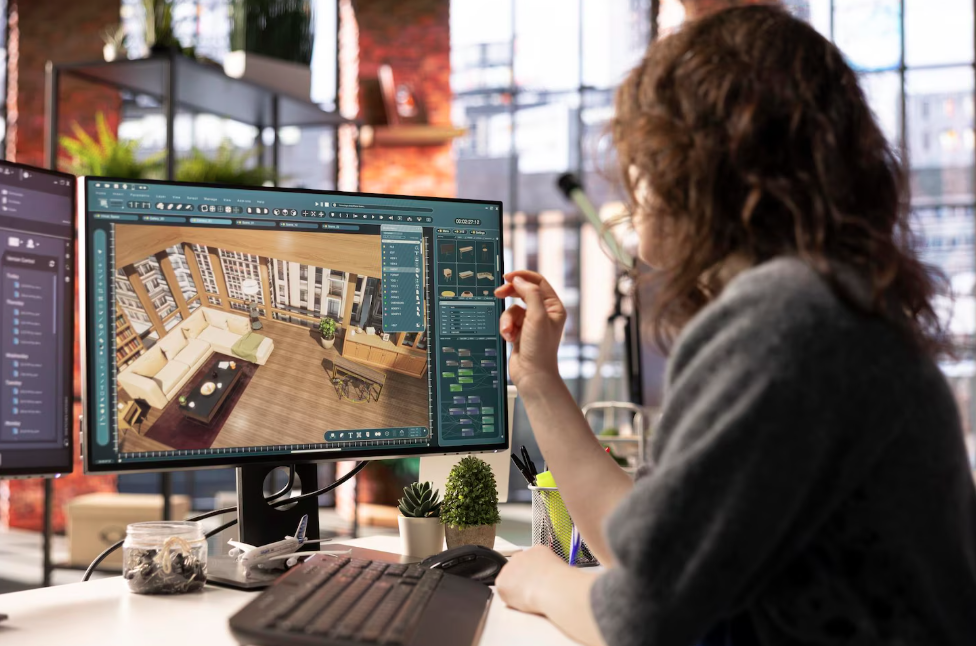
For years, construction estimators have depended on 2D drawings to calculate material quantities and prepare bids. While useful in their time, 2D takeoffs are increasingly viewed as outdated in today’s fast-paced and complex building environment. Manual tracing, repetitive calculations, and flat representations of multiple structures often result in errors and project delays.
This is why the industry is slowly moving toward 3D quantity takeoff software. By integrating intelligent 3D models with advanced estimating tools, construction professionals are unlocking greater accuracy, collaboration, and speed. This blog dives into why moving beyond 2D is essential, the benefits of linking 3D models to takeoff software, and how it reshapes the future of construction estimating.
The Limitations of 2D Takeoffs
Traditional 2D takeoffs require estimators to carefully review digital blueprints or printed drawings and then manually measure elements. While effective for smaller projects, this method is increasingly inefficient in modern construction workflows.
- Time-Consuming: Estimators can spend days measuring large projects, reducing bidding capacity.
- Multiple Inaccuracies: Manual inputs increase the risk of inaccuracies in cost estimates.
- Flat Representations: 2D drawings lack depth, making it harder to spot design conflicts or visualize spatial arrangements.
- Multiple Revisions: Each design change means redoing portions of the takeoff.
These limitations show why contractors are adopting BIM quantity takeoff and 3D-integrated workflows.
What Is 3D Model Integration in Quantity Takeoff Software?
Integrating 3D models with takeoff software means connecting Building Information Modeling (BIM) or CAD-based models directly to construction estimating tools. Unlike 2D drawings, 3D models hold embedded data for each building element—dimensions, material specifications, and volume details.
With 3D quantity takeoff software, estimators can automatically extract material quantities from these models. This data-driven process minimizes human error, saves significant time, and keeps estimates consistent with design changes.
Advantages of 3D Quantity Takeoffs
1. Higher Accuracy
Since every element in a BIM model carries detailed attributes, quantities are pulled directly from reliable data, reducing errors found in manual takeoffs.
2. Time Efficiency
Automated extraction from 3D models accelerates takeoffs, allowing estimators to focus on cost analysis and bid strategy instead of repetitive tasks.
3. Better Visualization
Teams can view and interact with the building model in 3D, improving clarity and collaboration compared to flat 2D drawings.
4. Dynamic Updates
When architects update a design, quantities in AI takeoff software adjust instantly, ensuring estimates remain accurate in real time.
5. Collaboration Across Teams
With cloud-enabled tools, designers, engineers, and contractors all work with the same BIM model, minimizing miscommunication.
6. Clash Detection
3D models help identify spatial conflicts—like overlapping mechanical or structural components—before they become costly field issues.
Real-World Use Cases
The adoption of 3D quantity surveying software is becoming standard across different project types:
- Commercial Buildings: Contractors use BIM takeoff tools to calculate structural steel, concrete, and MEP quantities more efficiently.
- Infrastructure Projects: Bridges, tunnels, and roadways benefit from enhanced visualization and accurate measurement of complex geometries.
- Residential Construction: Developers of large housing projects can scale takeoffs quickly across repeated unit designs, reducing redundancy.
These use cases prove that 3D-integrated construction estimating software is more than a trend—it’s becoming an industry requirement.
Challenges in Moving from 2D to 3D
Like any technological shift, transitioning to 3D takeoff software comes with challenges:
- Learning Curve: Estimators used to 2D workflows need training to adopt model-based processes.
- Software Compatibility: Not all BIM tools integrate seamlessly with every estimating platform.
- Upfront Costs: Investments in licenses, training, and implementation can be significant for smaller firms.
- Model Quality: Takeoff accuracy depends heavily on the precision of the BIM model provided by designers.
Despite these obstacles, the long-term ROI—through reduced errors, faster bids, and improved project outcomes—far outweighs the initial challenges.
The Future of 3D-Driven Takeoffs
The future of construction estimating tools is already expanding beyond 3D integration:
- AI-based Takeoffs: AI helps analyze 3D models, predict material usage, and optimize costs automatically.
- 4D & 5D BIM Integration: Future workflows will integrate scheduling (4D) and cost data (5D) directly into takeoff processes.
- Cloud-Based Estimating: Teams will collaborate on models in real time, regardless of location.
- Sustainability Features: The best takeoff software will include carbon footprint analysis, enabling eco-conscious material choices.
By combining 3D, AI, and cloud technology, estimators will have end-to-end solutions that streamline bidding and project planning.
Conclusion
The shift from 2D to 3D quantity takeoff software is more than a technological improvement—it’s a complete transformation in how construction projects are estimated and managed. With benefits such as higher accuracy, faster workflows, dynamic updates, and stronger collaboration, model-based estimating is fast becoming the industry standard.
Companies that embrace BIM quantity takeoff and AI-based takeoff tools now will position themselves ahead of the competition. Those sticking to outdated 2D methods risk falling behind in efficiency, profitability, and innovation. Book a personalized demo today with Beam AI to save 90% of the time while boosting bid volume by 2X.
