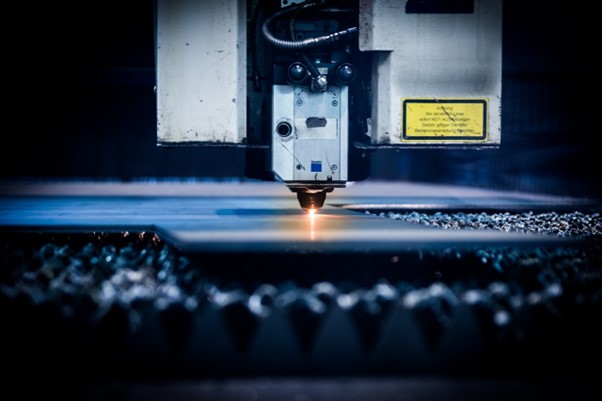
If you are in the manufacturing industry, you must be familiar with CNC precision machines. These machines are transforming how components are produced. Manufacturers save on cost and time to create complex designs thanks to the machine’s accuracy, consistency and speed. Computer Numerical Control (CNC) machines have revolutionized the manufacturing industry, from medical devices and automotive parts to electrical components. However, what exactly is CNC precision machining and how does it work? Read on to find out.
What Is CNC Precision Machining?
CNC precision machining is the process of shaping raw material into a desired product using computer-aided manufacturing (CAM) or computer-aided design (CAD). The process minimizes the amount of human intervention needed in the production process. The designers create and translate the design into manufacturing instructions, which the CNC machine operator inputs into the CNC machine for manufacturing to begin. In addition, the operator uses tolerance to ensure precision.
How Precise Are CNC Machines?
CNC machines are very precise. The system interprets the digital design files (G-code) to guide the cutting tools accurately. Unlike traditional machining, where manual operation is prevalent, CNC machining relies on advanced software and automation to enhance precision, efficiency and repeatability. In fact, CNC machines can produce parts with precision levels that were once thought impossible. Moreover, they ensure uniformity across batches because they can repeat tasks with minimal deviation.
That said, how do these machines achieve that level of precision? Well, several factors influence the output.
- Programming and Software—It all starts with the G-code. Certified Journey-level Machinists insist on accuracy to precisely tell the machine how to cut, turn, or mill.
- Tooling—CNC machines use high-quality cutting tools. When combined with advanced tool paths, they become very precise.
- Material Selection—CNC machines can handle different materials, including metals and plastics. However, each requires specific tooling and machining parameters.
What Do CNC Machines Do?
CNC machines can perform a wide range of tasks. From automotive, security and aerospace to healthcare, CNC machining services are vital, especially for parts that must meet tight tolerance requirements. According to the Certified Journey-level Machinists, here are the key functions of CNC machines.
· Milling
CNC milling machines use rotary cutters to remove excess material from a workpiece. This process is ideal for creating complex shapes and contours. Examples include the helical mill and chamfer mill.
· Turning
CNC turning involves rotating a workpiece while a stationary cutting tool removes material. It is commonly used for cylindrical parts and components. Lathes are the most popular tools for CNC turning processes.
· Drilling
CNC drilling machines do exactly as their name suggests. They create holes in a workpiece with precision and consistency. This is essential for numerous applications, like the aerospace and automotive industries. Spotting drills, chucking readers and peck drills are examples of drill bits.
· EDM (Electrical Discharge Machining)
CNC machines using EDM employ electrical discharges to shape materials. In the setup, the machine and the workpiece are separated by dielectric fluid and the voltage is applied to the workpiece. This technique is invaluable for intricate and delicate components.
What Are the Advantages of CNC Machining?
There’s no doubt that CNC machining is a game-changer in manufacturing. CNC machine experts say CNC machining helps lower production costs due to quicker turnaround time, greater accuracy, without wastage or defects. Moreover, it enables efficiency in production because you create parts according to exact specifications.
Conclusion
CNC precision machining is an effective process for manufacturing high-quality custom parts that need exact specifications. The machines help produce precise parts faster and at a lower cost. However, always work with a skilled and reliable team for the best results.
