
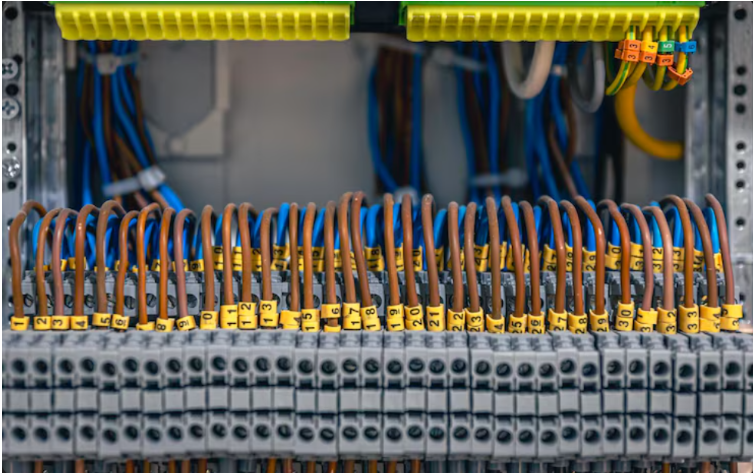
Modern industries rely heavily on automation to improve productivity, safety, and efficiency. Machines, sensors, and automated systems must communicate continuously to ensure smooth operations. One of the most important components that supports these systems is the Control Cable.
Control cables transmit signals that allow equipment and machines to operate correctly. In demanding industries such as mining and heavy manufacturing, specialized cables like Mining Cable are also required to handle harsh operating conditions.
What Is a Control Cable
A Control Cable is designed to transmit low voltage electrical signals used to control machinery and automation systems. These cables connect control panels, sensors, and electrical equipment, allowing signals to move between devices.
Unlike power cables, which transmit electrical energy, control cables focus on transmitting commands and monitoring data.
These cables play an essential role in automated systems where precise communication between components is required.
Importance in Industrial Automation
Industrial automation relies on complex networks of machines and control systems. Sensors collect information about temperature, pressure, movement, and other operational parameters.
Control systems process this information and send commands back to machinery to adjust operations.
A reliable Control Cable ensures that these signals are transmitted accurately without interference. Without dependable control cables, automated systems would not function properly.
In manufacturing facilities, thousands of control cables may be used to connect machines and monitoring equipment throughout the production environment.
Mining Cable for Extreme Environments
Mining operations present some of the harshest conditions for electrical equipment. Cables used in these environments must withstand mechanical stress, heavy vibrations, moisture exposure, and abrasive materials.
A specialized Mining Cable is designed to operate reliably under these extreme conditions. These cables are commonly used to power mining equipment such as drilling machines, conveyor systems, and underground transport systems.
Mining cables typically include reinforced insulation layers and protective outer jackets that protect against physical damage and environmental hazards.
Construction and Design of Industrial Cables
Both Control Cable and Mining Cable systems include several design features that ensure durability and performance.
Control cables often include shielding layers that prevent electromagnetic interference. This helps maintain signal clarity in environments where many electrical systems operate simultaneously.
Mining cables, on the other hand, are designed with extra mechanical protection to withstand crushing forces, abrasion, and constant movement.
These design features allow cables to perform reliably even in challenging industrial environments.
Safety and Reliability in Industrial Systems
Industrial facilities must maintain strict safety standards to protect workers and equipment. Reliable cabling systems play a key role in ensuring operational safety.
A durable Mining Cable ensures stable power delivery to heavy machinery, reducing the risk of equipment failure or power interruptions.
At the same time, dependable Control Cable systems ensure that automated processes function correctly and that monitoring systems can detect potential problems.
Together, these cables help maintain safe and efficient industrial operations.
Growing Demand for Industrial Cable Solutions
As industries continue to adopt advanced automation technologies, the demand for high performance industrial cabling systems is increasing rapidly.
Modern factories rely on robotics, smart sensors, and automated monitoring systems. These technologies require reliable signal transmission, making Control Cable systems essential for modern manufacturing environments.
Similarly, industries such as mining, construction, and energy production continue to require durable Mining Cable solutions capable of operating under extreme conditions.
With increasing industrial automation worldwide, the importance of reliable cable infrastructure will continue to grow.
Conclusion
Industrial automation depends on reliable communication and power systems. Control Cable networks ensure that machines and sensors can communicate effectively within automated environments.
Meanwhile, specialized Mining Cable systems provide durability and performance in some of the most demanding industrial conditions.
Together, these cable solutions support efficient operations, improve workplace safety, and enable industries to operate reliably in modern technological environments.
