
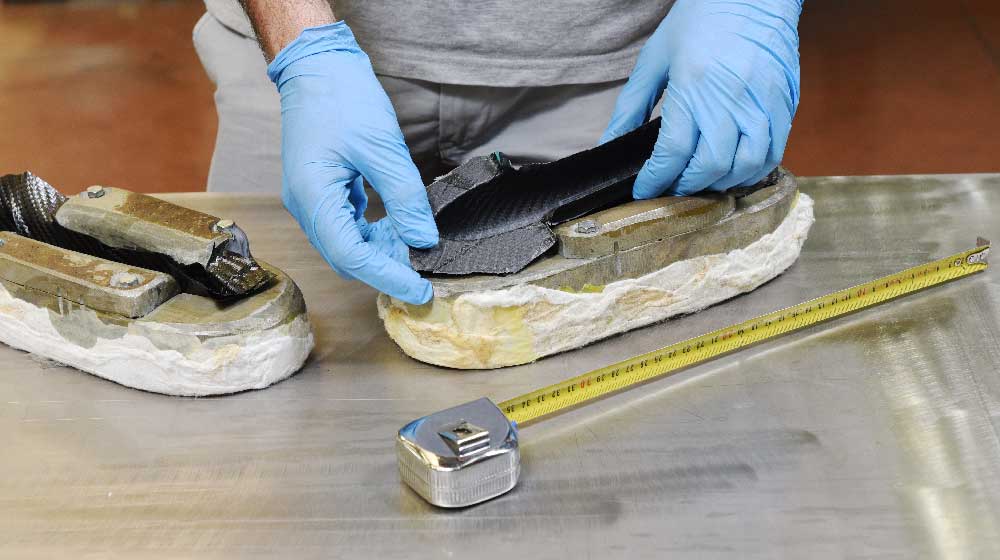
Most people notice a finished carbon fibre part for its weave, gloss, and shape. Far fewer see the tool that made it possible. Yet the quality of almost every composite component is decided long before resin meets fibre, in the design, construction, and care of the mould. A mould, in this context, is a precisely shaped tool against which layers of fibre and resin are laid, shaped, and cured. If the tool is accurate, stable, and well maintained, the parts it produces can be consistent. If it is not, even skilled lay-up work will struggle to compensate.
What a Mould Does, and Why Accuracy Comes First
A mould defines the outer shape of a part, and in many processes it also defines the surface finish. The fibre layers are placed against the mould surface, resin is introduced or already present in pre-impregnated material, and the assembly is cured until it holds its shape. When the part is released, its visible surface carries the imprint of the mould, including any flaw, scratch, or waviness in the tool.
That is why dimensional accuracy is the first requirement. A mould must match the intended geometry within tight tolerances, including draft angles that allow the part to be removed without damage, and allowances for shrinkage and thermal movement during curing. Small errors at the tool stage become systematic errors in every part that follows, so tool design usually involves careful measurement, prototyping, and checking against the original design data before production begins.
Materials and Construction Choices for Tooling
Moulds for composite parts can be made from several materials, each with trade-offs in cost, durability, thermal behaviour, and lead time. Composite moulds, often made from glass fibre or carbon fibre tooling materials, can be relatively quick to produce and can match the thermal expansion of the parts they make, which helps control dimensions during heated curing. Metal moulds, including aluminium and steel tooling, tend to be more durable and dimensionally stable over many cycles, but they can be heavier, more expensive, and slower to manufacture.
Lay-Up, Vacuum, and the Curing Cycle
Once the mould is prepared, fibre layers are laid into it in a planned sequence, with attention to fibre direction, overlap, and coverage around curves, corners, and edges. Fibre orientation affects strength and stiffness, so the lay-up plan is a technical document, not a matter of appearance alone. Layers must follow the mould closely without bridging across concave areas, wrinkling, or leaving gaps that could become weak spots or visible defects.
Vacuum bagging and pressure are commonly used to consolidate the layers, remove trapped air, and hold the material firmly against the mould during curing. A well-sealed vacuum system, with correctly placed breather and release materials, helps produce a dense, consistent laminate. Leaks, poor sealing, or uneven pressure can leave voids, dry areas, or thickness variation, so operators check seals and gauges carefully before a cure begins.
Curing itself is a controlled process of heat, time, and sometimes pressure. Resin systems have recommended cure schedules, and following them matters for strength, durability, and dimensional stability. Heating too quickly, holding at the wrong temperature, or cooling too rapidly can affect the final properties of the part. Records of temperature, time, and pressure help manufacturers repeat a successful cure and investigate any part that does not meet specification. For readers comparing suppliers, carbon fiber molds should be understood in this wider context: the tool, the lay-up, and the cure together determine the result, not any one element alone.
Inspection, Maintenance, and Tool Life
A mould is a working asset, and its condition should be inspected regularly. Before each production run, the surface should be checked for scratches, chips, contamination, and wear, and any release coating should be in good condition. After each run, the tool should be cleaned carefully with methods suited to its material and coating, and stored in a way that protects its surface from impact, dust, and moisture.
Quality, Consistency, and What Buyers Can Ask
For buyers of composite parts, understanding tooling helps frame better questions. Rather than asking only about price or delivery time, a buyer can ask how dimensional consistency is checked, how surface finish is controlled, and how curing is monitored and recorded. Answers that refer to inspection, measurement, calibration, and records suggest a controlled process. Vague answers, or a reluctance to discuss process at all, suggest a need for caution.
Frequently Asked Questions
1. Why do two parts from the same design sometimes look different?
Differences usually trace back to the tool, the lay-up, or the cure. A worn or damaged mould surface, variation in fibre placement, uneven vacuum, or inconsistent temperature can all change finish, thickness, or shape. Controlled processes, regular tool inspection, and cure records reduce that variation, which is why buyers should ask how consistency is checked rather than judging from a single sample alone.
2. How long does a composite mould last?
There is no single answer, because life depends on the tool material, part complexity, curing temperatures, cycle count, handling, and maintenance. A carefully used and maintained tool can last for many production cycles, while a tool subjected to rough handling or unsuitable cleaning can deteriorate much faster. Inspection records and a clear maintenance routine are better guides than a headline cycle count.
3. What matters most when choosing a tooling approach?
The most important factors are the part’s geometry, tolerances, surface finish, production volume, and curing requirements, balanced against cost and lead time. A tooling route that suits a short run of large panels may not suit a long run of small, detailed parts. Discussing those requirements openly with the manufacturer, and agreeing how quality will be measured, leads to better decisions than choosing on price alone.
Conclusion
Good carbon fibre parts begin with good tooling. Accurate moulds, careful lay-up, controlled vacuum and curing, and disciplined inspection and maintenance together determine whether parts will be consistent, durable, and well finished. Readers who understand that chain — tool, process, cure, inspection — can ask better questions, judge suppliers more fairly, and appreciate why quality in composite manufacturing is a matter of process control rather than luck. The mould may never be seen by the end user, but its influence is present in every part it produces.
