
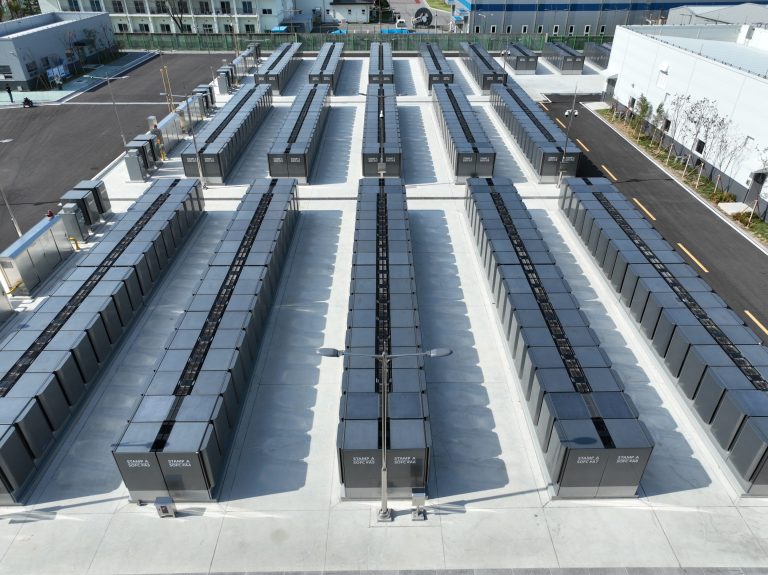
The automotive industry has always been at the forefront of innovation by designing vehicles that are faster, safer, and increasingly more sustainable. While the focus has largely been on reducing tailpipe emissions, leading automakers are also looking beyond the road. They’re rethinking how their facilities, research centers, and global campuses are powered, and that’s where Bloom Energy comes in.
Bloom Energy’s solid oxide fuel cell (SOFC) technology is helping automakers cut carbon emissions throughout their operations, reduce water use, and ensure resilient, always-on power. By generating clean electricity onsite—without combustion—Bloom is fueling the next wave of decarbonization across the automotive sector.
Clean Energy to Match a Clean Future
The Bloom Energy Server is a flexible, distributed generation platform that converts fuels like natural gas, biogas, or hydrogen into electricity through an electrochemical process rather than combustion. This means loweror even zero greenhouse emissions, virtually no harmful air pollutants, and no reliance on water for continuous operation.
Instead of drawing electricity from traditional power plants, Bloom’s servers sit directly on-site and are virtually weather-proof, providing reliable electricity on a 24/7 basis. For automakers, this protects critical operations—like manufacturing plants, design facilities, and testing sites—from outages while advancing sustainability goals. In addition, Bloom’s servers have a small footprint, about the size of one parking space. They can be deployed in a variety of configurations depending on the customer’s power needs and available space.
Honda: A Proven Commitment to Lowering Emissions
Honda has long been a leader in driving down emissions, from pioneering hybrid vehicles to introducing hydrogen fuel cell electric cars. However, the automaker has also worked to decarbonize its facilities.By 2010, Honda had voluntarily reduced its total carbon dioxide emissions by 10% from 2000 levels. In 2011, the company announced a further commitment to cut its carbon dioxide emissions by 30% by 2020, based on 2000 levels. Bloom played a significant role in Honda’s efforts to meet this goal.
In Torrance, California, Honda installed a 1 MW Bloom Energy system at its 101-acre campus to fulfill 25% of the site’s energy needs. The results have been remarkable. Over ten years, the Energy Servers are expected to reduce CO₂ emissions by about 16 million pounds—that’s a reduction of about 18-25% for every MWh the system generates. Honda’s installation is also estimated to save more than 3.25 million gallons of water per year compared to average California power plants, which is an essential step towardsustainability in a water-stressed region.
By generating approximately one-fourth of the campus’electricity needs, Honda has proven that decarbonization doesn’t come at the expense of performance.
Ferrari: Speeding Toward Carbon Neutrality
On the other side of the globe, Ferrari has partnered with Bloom Energy to help reach its ambitious goal of carbon neutrality by 2030. At its iconic Maranello, Italy, facility, Ferrari installed a 1 MW Bloom Energy Server to provide a portion of its baseload power.This was Bloom’s first installation of an energy system in Europe. It proceeded quickly—the servers were online within two months.
By leveraging Bloom’s fuel-flexible platform, Ferrari is not only cutting its carbon footprint, but also positioning itself as a European leader in adopting hydrogen and green gases. For a company that prides itself on technological excellence and high performance engineering, Bloom’s advanced SOFC platform is a natural fit.
Powering an Industry Shift
Automotive leaders like Honda and Ferrari show how Bloom Energy can help transform an entire industry’s environmental impact. With Bloom’s modular, scalable, and fuel-flexible platform, automakers can reduce their dependence on carbon-intensive grids, eliminate outage risks, and save water—all while driving toward ambitious climate targets.
The road to decarbonization doesn’t stop at the tailpipe. By rethinking how facilities are powered, the automotive industry is showing the world what true sustainability looks like. Bloom Energy is proud to be in the driver’s seat of this transformation.
