
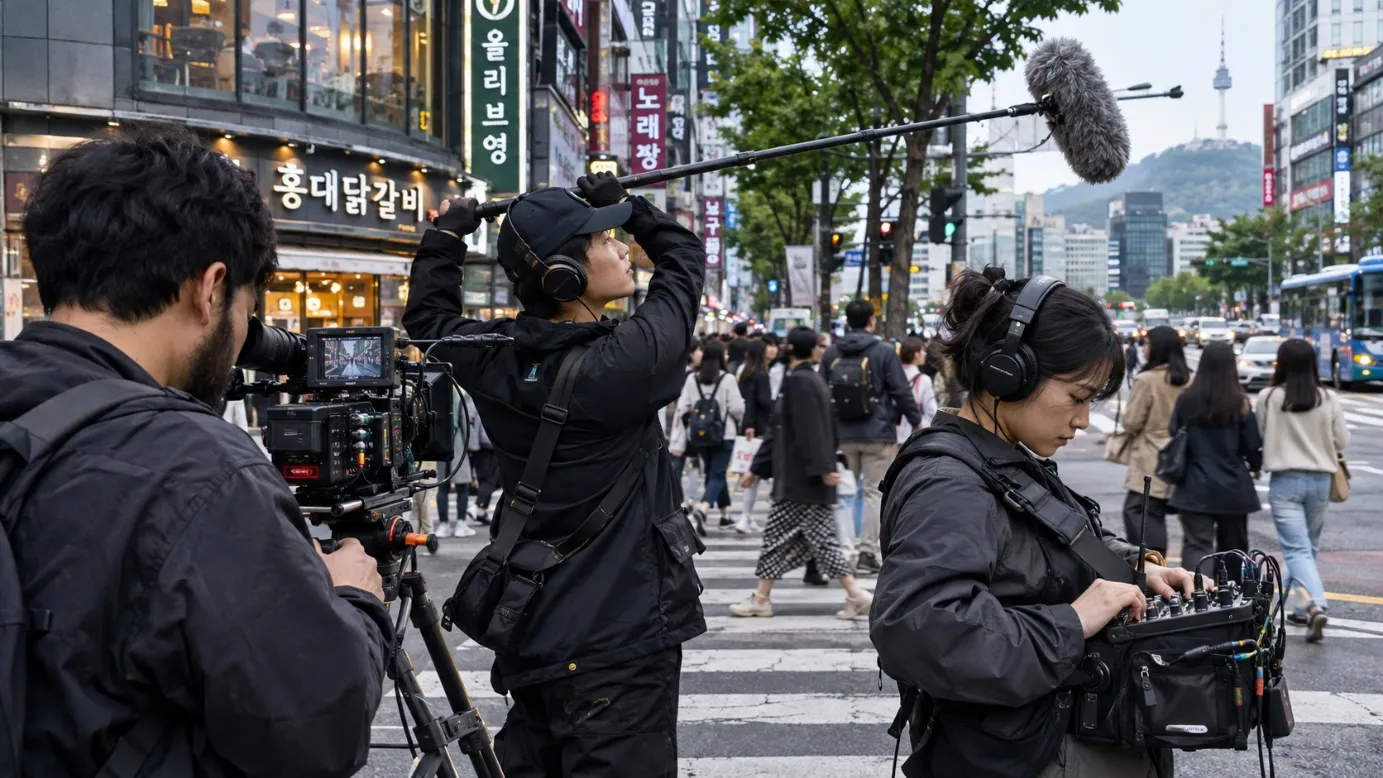
Seoul provides lively streets, crowded markets, elevated rail lines, and quiet residential corners, often within a short journey. That variety creates rich visual opportunities, but the soundscape can be difficult for a film crew. A beautiful establishing shot is not much use if an essential interview is overwhelmed by traffic or a nearby loudspeaker. Good location sound begins well before microphones are switched on. It depends on choosing spaces intelligently, protecting dialogue, and collecting the small details that make a scene feel real.
Listen Before Choosing the Frame
Scouting should involve more than checking natural light and camera angles. Stand where the interview subject will sit, close your eyes, and listen for several minutes. Notice changes in traffic, construction sounds, music from neighboring stores, and ventilation systems. A street that seems calm at ten in the morning may sound completely different during evening deliveries.
Ask whether the scene needs the location’s real atmosphere. A short street interview may benefit from bustling background noise, while an emotional personal account needs more control. The best decision preserves the character of the place without making viewers struggle to hear the speaker.
Match Equipment to the Conversation
Lavalier microphones can work well for interviews that involve movement, while a boom microphone may capture more natural speech when a skilled operator can stay close. Neither option solves every problem. Clothing rustle, strong wind, reflections from hard walls, and sudden sirens can still interfere. Monitoring through headphones is essential because some faults are easy to miss with the unaided ear.
When researching video production services near me during a Seoul shoot, ask prospective teams how they approach location audio rather than only which cameras they own. An experienced sound recordist, suitable wind protection, and a clear monitoring plan may contribute more to the final film than an extra camera angle.
Arrange the Set to Reduce Problems
Small position changes can make a large difference. Moving an interview away from a refrigerator, turning the speaker away from a busy road, or placing the camera under a sheltered overhang can improve clarity. Do not assume that a visually attractive café will be suitable; background music can create editing and rights problems even when speech is audible.
Production teams should discuss noise with location owners before shooting. Ask when deliveries occur, whether machinery can be paused, and whether public areas can be used without blocking ordinary access. These practical conversations help avoid rushed decisions while the subject is waiting.
Record More Than the Main Dialogue
Editors often need clean room tone and natural location ambiance to bridge cuts. Record a few minutes of the environment after the interview, ideally with people and equipment in similar positions. Collect useful individual sounds such as doors, steps, transit arrivals, or a distant crowd when the story calls for them. Label these recordings so the editing team understands when and where they were captured.
Avoid presenting unrelated effects as though they document a specific event. A sound effect can support atmosphere, but editorial productions should be careful not to create a misleading impression. The distinction matters especially in journalism and nonfiction work.
Make Sound Part of the Production Workflow
A production company in korea that offers filming and post-production coordination can help align location choices with editing needs. Camera and sound teams should agree on timecode or synchronization methods, file naming, backup responsibilities, and how problem takes will be flagged. Waiting until the edit to discover that sound files cannot be matched efficiently wastes valuable time.
Before leaving each location, listen to a short playback. Check that the primary interview has a usable recording and that backups have been stored separately. A simple verification routine can prevent an otherwise strong day’s work from turning into a difficult repair job.
Conclusion
Location sound should never be treated as a detail that can always be fixed later. Careful scouting, an experienced sound team, realistic location agreements, and disciplined recording habits preserve the authenticity of scenes filmed in a busy city. The goal is not absolute silence. It is a controlled balance between clear speech and the atmosphere that gives the film its sense of place. When producers listen as carefully as they look, the final story becomes easier to follow.
